
By Kate Hargreaves
From environmental research guides to reducing paper waste, Leddy Library has made recent strides in fostering a more sustainable campus.
In collaboration with the Office of Sustainability, Leddy Library has implemented numerous initiatives that demonstrate the major impact of even small changes.
Roger Reka, acting head of collections and licensing at Leddy Library and the librarian leading some of the recent sustainability efforts, worked with sustainability officer Nadia Harduar to determine directions for the library’s initiatives.
“Conversations with Nadia helped deepen my understanding of sustainability principles,” Reka says, “which made it easier to look at our practices with a new lens and identify meaningful changes we could make right away.”
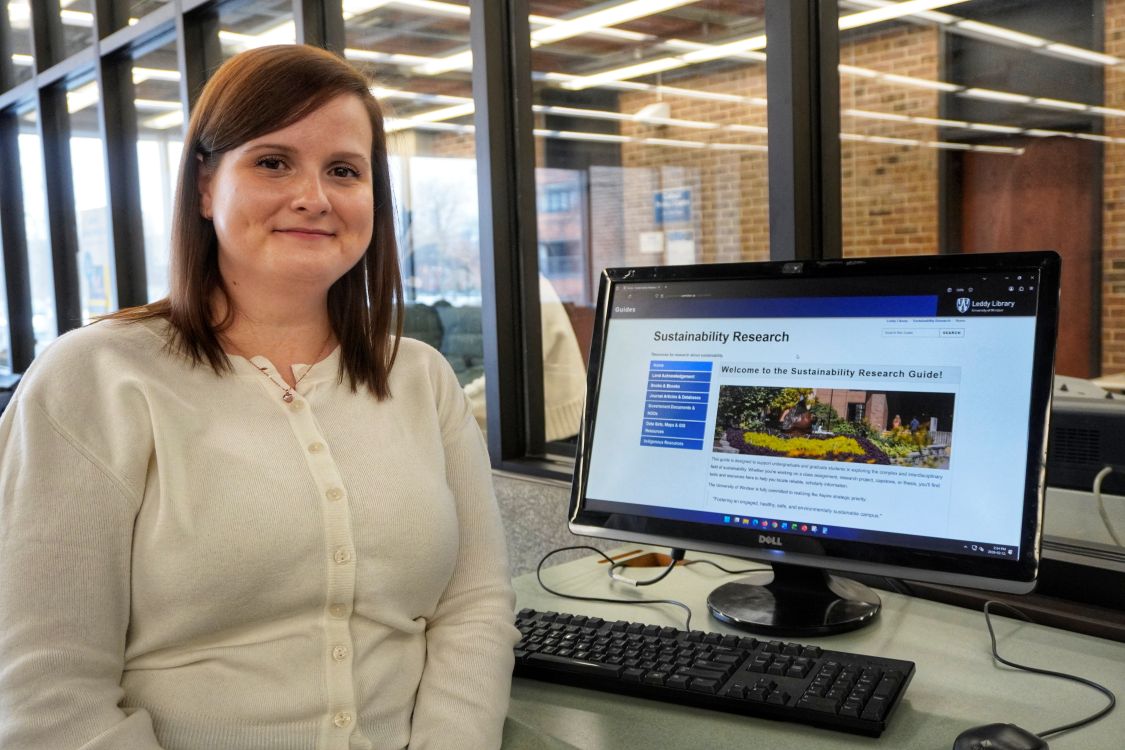
Some of these changes include integrating sustainability into research practices, through developing research guides, delivering programming around the environmental impacts of artificial intelligence and hosting an upcoming climate change workshop.
The library space has also received a greener makeover with modernized lighting using LED fixtures and motion detectors to save energy. In addition, Leddy Library also made recycling bins more accessible in the building, introduced composting and is prioritizing re-use over recycling of materials removed from library collections.
“This work encouraged us to re‑examine long‑standing workflows and routines that not only have lessened our environmental impact but have also made the work more efficient,” says Reka.
“By implementing practical sustainability measures, Leddy Library reviewed current practices and together we identified solutions to significantly improve operational efficiency while reducing paper usage,” adds Harduar.
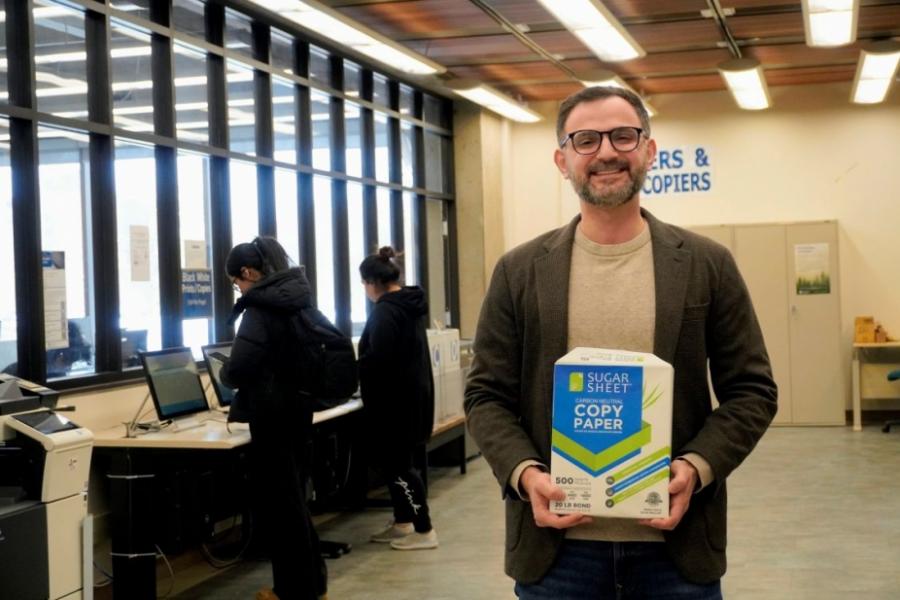
Switching from copy paper made of tree pulp to sugarcane fibre-based paper is estimated to save approximately 89 trees and reduce greenhouse gas emissions by 23,000 kg a year. Acquisitions and invoicing processes have also gone fully digital to further reduce paper waste.
Setting the tone provincially in the sustainability space, Leddy Library is leading a task group of Ontario university libraries that is exploring options to reduce the carbon footprint of the consortial interlibrary loan service. In 2025 alone Leddy Library loaned and borrowed over 7,000 print books through this service.
“I’ve had strong support from colleagues in my unit and from library administration, which has made it possible to move these initiatives forward,” says Reka. “I’m also encouraged by the enthusiasm from partner libraries across Ontario."
As Harduar notes, Leddy Library is a great example of the large impact of relatively small changes when it comes to the environment.
“This initiative demonstrates what can be achieved more broadly across campus and serves as a strong example of the impact a Green Office can have,” she says.
Leading by example works within departments as well, with Reka noting how starting the conversation on sustainability has led to other library faculty and staff bringing forward their own ideas.
“Department heads and managers are a critical driver of the university's sustainability framework,” Reka says.
“We're positioned to identify the best places to make changes, and to rally support in our departments.”
These changes, Reka stresses, do not have to be big to make a major impact.
His advice: “Smart with small changes and grow from there.”
To learn more about Leddy Library’s sustainability initiatives, visit its website.
For more information on Green Offices at the University of Windsor, visit the Office of Sustainability website.
Connect with your library